
Platform review · Updated November 2026
Trading 212 Review UK
Trading 212 is one of the UK’s most popular investing apps because it charges almost nothing. This review explains what you really pay, how it makes money, and whether it suits long-term ETF investors.
- Our rating
- 4.5/5 low-cost ETFs
- Commission
- £0 shares and ETFs
- FX fee
- 0.15% non-sterling
- Platform fee
- £0 Invest, ISA, SIPP

Verdict
Trading 212 review: our verdict
Trading 212 is one of the cheapest ways to invest in ETFs and shares in the UK. It charges no commission and no platform fee on its Invest account, ISA or SIPP, and its 0.15% FX fee is among the lowest available. As a result, it is an excellent low-cost home for a simple VWRP portfolio. However, it has no crypto, no mutual funds, no Junior ISA and limited research tools. Moreover, its SIPP cannot yet pay a retirement income. Overall, we rate it 4.5 out of 5 for low-cost ETF investing.
Key facts
Trading 212 at a glance
| Feature | Detail |
|---|---|
| UK company | Trading 212 UK Ltd, authorised by the FCA (FRN 609146) |
| Commission | £0 on shares and ETFs |
| Platform fee | £0 on Invest, ISA and SIPP |
| FX fee | 0.15% on non-sterling trades |
| Accounts | Invest, Stocks and Shares ISA, Cash ISA, SIPP (launched 2026) |
| Markets | 10,000+ shares, ETFs and investment trusts |
| Minimum | £1, with fractional shares |
| Interest on cash | Variable, around 3.8% AER in August 2026 |
| Deposits | Bank transfer free; cards 0.7% after £2,000 in total |
| Scale | 5 million+ funded accounts, £25bn+ client assets |
| Our rating | 4.5 out of 5 |
Sources: Trading 212 and independent reviews, fees checked November 2026. Always confirm on the FCA register and Trading 212’s fee page.
How it makes money
How Trading 212 makes money if trading is free
Free apps still need revenue, so it helps to know where Trading 212 earns its money. Understanding this also shows you which costs you can avoid. In short, there are four main sources.
| Revenue source | How it works | Can you avoid it? |
|---|---|---|
| Currency conversion | A 0.15% fee when you buy or sell shares priced in dollars, euros or other currencies | Yes, by buying pound-priced ETFs such as VWRP |
| Interest margin | It earns interest on client cash and passes on part of it | Partly, by keeping little cash uninvested |
| Securities lending | It can lend shares held in Invest accounts to other firms, backed by collateral, and shares the income | Lending applies to the Invest account; check current terms |
| CFDs | Its separate CFD platform earns from spreads and overnight financing | Yes, by not using CFDs |
None of these is unusual. In fact, most low-cost brokers rely on a similar mix. Still, the CFD side carries real risk, so long-term investors should stick to the Invest, ISA and SIPP accounts.
Fees
Trading 212 fees explained
| Fee | Cost |
|---|---|
| Share and ETF commission | £0 |
| Account or platform fee | £0 (Invest, ISA, SIPP) |
| FX conversion | 0.15% of the trade value |
| UK share purchases | 0.5% stamp duty (a government tax, not a Trading 212 fee; most ETFs are exempt) |
| Deposits | Free by bank transfer; 0.7% on card deposits after £2,000 in total |
| Withdrawals, transfers out, inactivity | £0 |
Worked fee examples
| What you do | Trading 212 cost | Notes |
|---|---|---|
| Invest £300 a month in VWRP | £0 | VWRP trades in pounds, so no FX fee; the fund charges 0.14% a year |
| Buy £1,000 of a US share | £1.50 | 0.15% FX fee; another 0.15% applies when you sell |
| Buy £1,000 of a UK share | £5.00 | 0.5% stamp duty; no FX fee |
| Deposit £5,000 by debit card | £21 | 0.7% on the £3,000 above the £2,000 free card limit |
| Deposit £5,000 by bank transfer | £0 | Bank transfers are always free |
vwrp.co.uk calculations from Trading 212’s published fees, November 2026.
As the table shows, the biggest avoidable cost is usually card deposits. Therefore, fund your account by bank transfer. In addition, if you invest mainly in pound-priced ETFs, the FX fee may never apply to you. Try your own figures in our VWRP cost calculator.
Cost comparison
How Trading 212’s costs compare
vwrp.co.uk calculation: platform fee plus VWRP’s 0.14% ongoing charge on £20,000. Vanguard Investor at £4 a month; Hargreaves Lansdown at 0.35% on ETFs. Fees as published in 2026.
On a £20,000 ISA invested in VWRP, Trading 212 costs about £28 a year, which is simply the fund’s own charge. By contrast, Vanguard Investor would cost about £76 and Hargreaves Lansdown about £98. Over 20 years, that difference compounds into thousands of pounds. Our guide on how to buy VWRP compares these platforms in more depth.
Accounts
Trading 212 accounts explained
Stocks and Shares ISA
The ISA has no fees to open or hold, and you can invest up to the full £20,000 yearly allowance. It is also flexible, so you can withdraw money and put it back in the same tax year without losing allowance. For most UK investors, this is the account to start with.
Cash ISA
The Cash ISA pays a variable rate linked to the Bank of England base rate, with interest paid monthly. As a result, it can be a convenient home for an emergency fund next to your investments. Our comparison of Cash ISA vs Stocks and Shares ISA explains how to split your allowance.
SIPP
Trading 212 launched its SIPP in 2026 after FCA approval. It has no account, custody or dealing fees. In addition, it adds basic-rate tax relief to personal contributions automatically, so £80 from you becomes £100 in your pension. Higher-rate taxpayers can claim extra relief through their tax return.
However, the SIPP does not yet offer flexi-access drawdown. Therefore, you may need to transfer to another provider before you start taking an income. For younger savers, this matters less, because drawdown may be added before they retire. Our guide to ISA vs SIPP explains which wrapper suits which goal.
Invest account
The Invest account is a taxable general account for money beyond your ISA and pension allowances. Gains and dividends may be taxable here, so it usually comes after the ISA.
What is missing
There is no Junior ISA and no Lifetime ISA. In addition, Trading 212 does not offer mutual funds, so you cannot buy funds such as Vanguard LifeStrategy here. Our guide to index funds vs ETFs explains when that matters.
Pies and AutoInvest
How Pies and AutoInvest work
Pies are Trading 212’s best feature for long-term investors. A Pie is a portfolio with fixed target weights. For example, you might set 80% VWRP and 20% a global bond ETF. Then, every time you add money, Trading 212 splits it according to those weights.
- Create a Pie Choose up to dozens of ETFs or shares and set a percentage for each.
- Turn on AutoInvest Pick an amount and a schedule, such as £300 on the first of each month.
- Fund by bank transfer or Direct Debit This keeps deposits free.
- Let it buy automatically Fractional shares mean every pound is invested.
- Rebalance when needed One tap brings the Pie back to its target weights.
As a result, Pies make it easy to follow a disciplined, hands-off plan. Moreover, because there is no commission, frequent small purchases cost nothing extra. Our guide to investing £100 a month shows how to build the habit.
Other features
Other key features
Fractional shares
With fractional shares, you can buy part of a share or ETF from just £1. So even expensive shares are open to small investors, and every pound you deposit can be put to work.
Interest on uninvested cash
Cash waiting to be invested can earn variable interest, which was around 3.8% AER in August 2026. It is calculated daily, which suits investors who drip money into the market. However, the rate follows the Bank of England base rate, so it will change.
The app and website
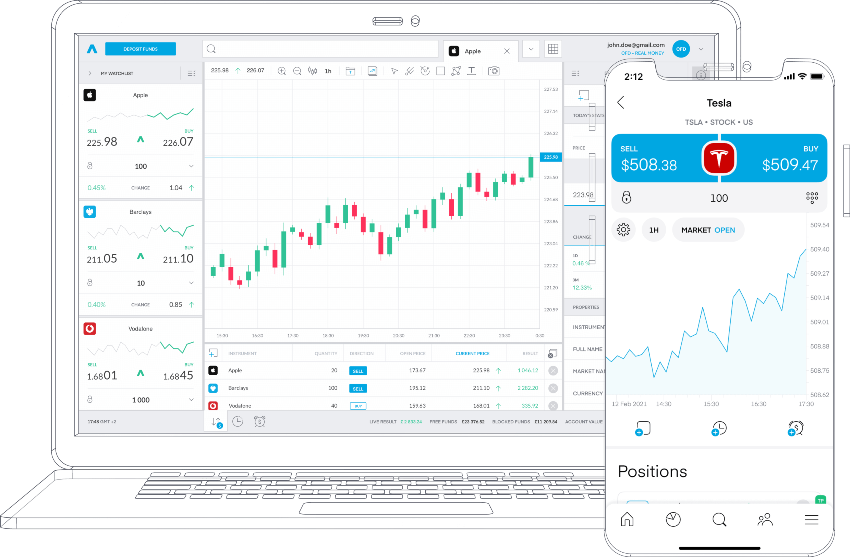
The app is clean and quick, with live prices, watchlists and simple charts. On the other hand, research tools are basic compared with older platforms. For example, there are few fund reports or analyst notes. In addition, support is mainly through chat and email rather than phone.
What is not available
Trading 212 does not offer crypto to UK retail investors. Our guide to the best crypto exchanges in the UK covers regulated options.
Securities lending
Securities lending explained
Securities lending means lending shares from client Invest accounts to other financial firms, often for short selling. In return, the borrower provides collateral and pays a fee, part of which goes back to investors. Many brokers and fund managers do this, including ETF providers.
The main risk is that a borrower fails and the collateral falls short. However, collateral usually exceeds the value of the shares lent, which reduces this risk. Therefore, for most investors, the risk is small. Even so, check the current terms and opt-out options in the app.
Safety
Is Trading 212 safe?
The FCA authorises and regulates Trading 212 UK Ltd under FRN 609146. In addition, client shares sit in segregated accounts with custodians, and the firm keeps client money apart from its own funds. If the firm failed, the FSCS could cover eligible investments up to £85,000. Moreover, with more than 5 million funded accounts and £25bn of client assets, it is one of the largest investing apps in the UK.
However, a few points deserve attention. First, securities lending adds a small counterparty risk, although collateral backs every loan. Second, the CFD account is high risk: 73% of retail CFD accounts lose money with this provider. Third, turn on two-factor login to protect against account takeovers. Finally, FSCS cover never protects against falling markets. Our guide on whether your ETF is safe explains these layers of protection.
Alternatives
Trading 212 compared with alternatives
| Platform | Platform fee | FX fee | SIPP | Best for |
|---|---|---|---|---|
| Trading 212 | £0 | 0.15% | Yes, free (no drawdown yet) | Low-cost ETF investing |
| Vanguard Investor | £4 a month below £32,000; 0.15% above, capped at £375 | Not applicable | Yes, with drawdown | Vanguard-only portfolios |
| eToro | £0 | About 0.5% (0.70% in ISA) | No | Copy trading and crypto |
| Interactive Brokers | Low | Very low | Yes | Large, global portfolios |
| InvestEngine | £0 (DIY) | None (ETFs only) | Yes | ETF-only portfolios |
Summary only. Fees vary by account; check each provider.
Read our reviews of eToro, Interactive Brokers and Vanguard Investor for more detail, or see our best ETF platforms guide.
Who it suits
Is Trading 212 right for you?
- You want free ETF investing in an ISA or SIPP
- Automatic monthly investing appeals to you
- You buy US shares and want low FX costs
- You are starting with a small amount
- You want interest on uninvested cash
- You want mutual funds or a Junior ISA
- Crypto is part of your plan
- Detailed research tools matter to you
- You need pension drawdown now
- You prefer phone support
Getting started
How to start investing with Trading 212
- Download the app Choose the Invest, ISA or SIPP account, not CFDs.
- Verify your identity Have photo ID and your National Insurance number ready.
- Turn on two-factor login This protects your account from takeovers.
- Deposit by bank transfer It is free, unlike large card deposits.
- Build a Pie For example, 100% VWRP is a simple start.
- Set up AutoInvest Then invest a fixed amount every month.
- Review once a year Check your mix and rebalance if needed.
Our step-by-step guide to opening a Stocks and Shares ISA covers the general process, which is similar on every platform.
Transfers
Transferring to or from Trading 212
You can transfer an existing ISA to Trading 212 without losing its tax-free status. To do this, start the transfer from inside the Trading 212 app, not by withdrawing the money yourself. Similarly, you can move a pension into the SIPP. However, check first whether your old pension has guarantees or lower charges that you would lose.
Trading 212 does not charge to transfer out. Therefore, you are not locked in if your needs change, for example if you later need pension drawdown.
Rating
Our rating breakdown
| Area | Score out of 5 | Comment |
|---|---|---|
| Costs | 5 | No commission or platform fee; 0.15% FX |
| Accounts | 4 | ISA, Cash ISA, SIPP; no JISA, LISA or drawdown |
| Investment choice | 4 | 10,000+ shares and ETFs; no funds or crypto |
| Ease of use | 5 | Pies, AutoInvest and fractional shares |
| Research and support | 3 | Basic tools; chat and email support |
| Overall | 4.5 | Excellent for low-cost ETF investing |
Risks
Risks of investing with Trading 212
Investments can fall as well as rise, and you may get back less than you put in. In addition, the separate CFD account is high risk, and most people should avoid it.
Moreover, platform features and interest rates can change, so check the latest terms before relying on them. Finally, your own behaviour is a risk, because selling in a panic locks in losses. For this reason, invest only money you can leave alone for at least five years. Meanwhile, keep an emergency fund in cash, so that you never need to sell at a bad time.
FAQ
Trading 212 review: FAQs
Choosing and using it
Is Trading 212 safe?
Trading 212 UK Ltd is authorised and regulated by the FCA (FRN 609146). Client shares are held in segregated accounts with custodians, and client money is kept apart from the firm's own money. If the firm failed, the FSCS could cover eligible investments up to £85,000.
Is Trading 212 really free?
There is no commission and no platform fee on the Invest account, ISA or SIPP. However, you pay a 0.15% FX fee on shares priced in other currencies, 0.5% stamp duty on UK shares, 0.7% on card deposits above £2,000 in total, and each ETF's own ongoing charge.
How does Trading 212 make money?
Mainly from the 0.15% FX fee, the margin on interest earned on client cash, securities lending in Invest accounts, and its separate CFD platform.
Does Trading 212 have a SIPP?
Yes. Trading 212 launched a SIPP in 2026 with no account, custody or dealing fees. It claims basic-rate tax relief on personal contributions automatically. It does not yet offer flexi-access drawdown.
Does Trading 212 pay interest on cash?
Yes. Uninvested cash can earn a variable rate, which was around 3.8% AER in August 2026. The rate follows the Bank of England base rate and is paid daily.
Can I buy VWRP on Trading 212?
Yes. VWRP is available in the Invest account, ISA and SIPP. Because it trades in pounds, there is no FX fee, so you only pay the fund's 0.14% charge.
What are Trading 212 Pies?
Pies are portfolios with set percentages, such as 80% VWRP and 20% bonds. You can invest into a Pie automatically each month with AutoInvest and rebalance with one tap.
Practical questions
Does Trading 212 offer crypto?
No. Trading 212 does not offer cryptoassets to UK retail investors.
Does Trading 212 have a Junior ISA or Lifetime ISA?
No. It offers a Stocks and Shares ISA, a Cash ISA, a SIPP and a general Invest account, but no Junior ISA or Lifetime ISA.
What is the minimum deposit?
You can start with £1, because Trading 212 offers fractional shares. Bank transfers are free, while card deposits above £2,000 in total cost 0.7%.
Is Trading 212 better than eToro?
For buying ETFs and shares cheaply, Trading 212 usually wins thanks to its 0.15% FX fee and free SIPP. eToro, by contrast, offers crypto and copy trading.
Is Trading 212 good for beginners?
Yes, for beginners who want to invest in ETFs or shares. The app is simple, there are no platform fees and you can start with £1. However, beginners should avoid the separate CFD account.
Can I transfer an ISA to Trading 212?
Yes. You can transfer an existing Stocks and Shares ISA or Cash ISA in, and Trading 212 does not charge to transfer out. Your old provider may have its own exit terms.
Is the Trading 212 ISA flexible?
Yes. You can withdraw money and put it back in the same tax year without using extra ISA allowance.
Keep reading
Related guides
Sources
Sources
- FCA Financial Services Register
- Trading 212 – Fees
- Delphina – Trading 212 review (fees verified October 2026)
- Up The Gains – Trading 212 review UK (August 2026)
- FSCS – Investment protection
This review is general information, not personal financial advice. Some links may be affiliate links, which never affect our rating. vwrp.co.uk is independent and not affiliated with Trading 212, Vanguard or any provider mentioned. Capital is at risk; past performance is not a reliable guide to future returns.