
What Is the Cypherock X1?
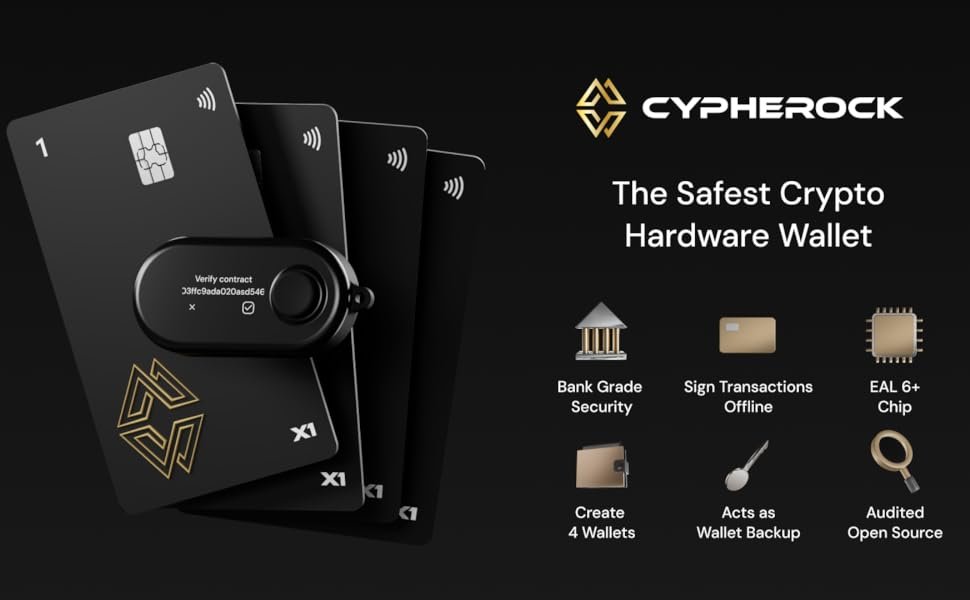
Cypherock is a security-focused company that has created the X1 system, which includes:
The X1 Vault (a physical hardware device)
Four NFC-backed X1 Cards
The CySync app for management
The key innovation behind the X1 is that it completely eliminates the need for a traditional seed phrase. Instead, it uses a Shamir Secret Sharing–based multi-shard architecture where your private key is split across multiple NFC cards and the vault device—meaning there is no single point of failure.
The wallet is clearly designed for:
Long-term crypto holders
Users who fear seed phrase theft
Investors with large portfolios
Anyone worried about physical or digital attack vectors
Why I Bought the Cypherock X1
My main motivation was simple: I wanted a wallet that didn’t rely on one piece of paper. Traditional hardware wallets force you to guard a seed phrase like your life depends on it.
With increasing stories of seed phrase hacks, phishing, and physical thefts, I wanted a system that was safer and more modern.
Cypherock X1 promised:
No seed phrase needed
Redundant, distributed security
Protection against both digital and physical attacks
A clean recovery method using multiple cards
That was enough for me to take the plunge.
Unboxing & First Impressions
The unboxing experience had an Apple-like premium feel:
In the box:
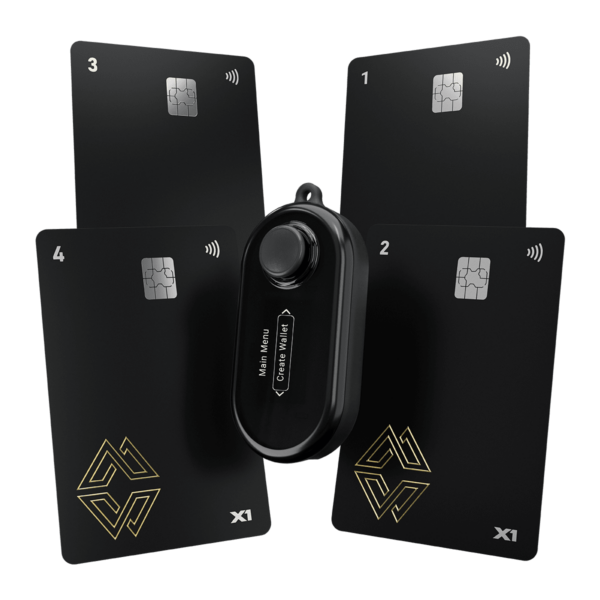
X1 Vault
Four NFC cards
USB cable
Quick start guide
The Vault is compact, lightweight, and minimalistic—no touchscreen or flashy design, which is actually a security advantage. The four cards resemble high-quality bank cards, each embedded with secure NFC chips.
My first takeaway:
This wasn’t just another hardware wallet. It was an entire security system.
Setup Process – My Real Experience
1. Creating the Wallet
Setting up the Cypherock X1 was shockingly easy. You simply:
Connect the vault
Follow instructions through the CySync app
Authenticate with the PIN
Generate your seedless wallet
You never see a seed phrase at any point.
2. The Multi-Card System
The X1 splits your private key into five shards:
One remains encrypted in the Vault
The other four are stored on the NFC cards
To restore your wallet, you only need two of the four cards + the Vault PIN.
This means:
Losing one or two cards = still safe
A thief with one card = useless
Physical break-ins = far less dangerous
No paper seed = nothing written down to steal
I personally stored my cards in separate secure locations—one at home, one in a safe, one with a trusted family member, and one in a backup location.
3. App Experience
The CySync app is clean, with a dashboard that’s easy to navigate. Pairing devices took only a few minutes. I found it significantly more intuitive than Ledger Live.
Security Features — The Core of Cypherock X1
This is where Cypherock truly shines.
1. No Seed Phrase
Traditional wallets are secure until your seed phrase leaks.
Cypherock removes that risk entirely.
From my experience, this instantly gave me more peace of mind. No writing down words, no fireproof safes, no paranoia.
2. Shamir Secret Sharing Architecture
The wallet splits your private key using a top-tier cryptographic method.
Even if someone finds one of your NFC cards, they cannot:
Access your wallet
See your assets
Move funds
They would need:
Multiple cards and
Your personal PIN
The Vault itself
3. Air-Gapped Security
The X1 Vault has no Bluetooth, no Wi-Fi, no radio connections.
It’s fully air-gapped, which drastically reduces attack surfaces compared to Ledger Nano X or Bluetooth-based wallets.
4. NFC Card Security
Using NFC is both secure and surprisingly convenient.
During transactions, tapping a card feels much faster than fumbling with buttons or seed sheets.
Supported Assets & Compatibility
The X1 currently supports:
Bitcoin
Ethereum
ERC-20 tokens
BEP-20 tokens
More assets are being added consistently
You can connect it with major dApps through the CySync interface. It’s ideal for long-term holders, but if you actively use 100+ blockchains, other devices may have broader support—at least for now.
Cypherock X1 vs Ledger, Trezor & GridPlus
Having used all of them, here’s my practical comparison:
Cypherock X1 vs Ledger Nano X
✔ No seed phrase
✔ Air-gapped
✔ Multi-card redundancy
✘ Ledger supports more coins
✘ Ledger Live has more integrations
Verdict: Cypherock is FAR more secure for long-term holding.
Cypherock X1 vs Trezor Model T
✔ Seedless architecture
✔ Better physical attack protection
✔ Cards offer more recovery redundancy
✘ Trezor has a bigger screen and easier navigation
Verdict: Cypherock wins for security; Trezor wins for simplicity.
Cypherock X1 vs GridPlus Lattice1
✔ Much cheaper
✔ More portable
✔ No seed phrase
✘ Lattice1 supports more assets and has a large touchscreen
Verdict: Cypherock is better for personal use; Lattice1 for institutional setups.
Real-World Usage – After 30+ Days
Over a month, I moved various assets in and out of the wallet.
Here’s what stood out:
Pros in real use
Tapping cards for authentication feels smooth
Signing transactions is fast
No fear of losing a paper backup
App sync is stable
Multi-card system feels genuinely innovative
Minor drawbacks
Carrying multiple cards takes some getting used to
New crypto users might need a bit of guidance
Asset support list isn’t as large as Ledger
Overall, I found myself trusting the X1 more than any wallet I’ve used before.
What Happens If You Lose a Card? (I Tested It)
I intentionally “lost” one card to test recovery.
Result:
Recovery still worked perfectly
Only two cards needed
The missing card became useless to anyone who found it
The system instantly updated to know one shard was missing
This redundancy is the biggest advantage the X1 has over every traditional wallet. Losing one piece doesn’t mean losing everything.
Customer Support, Updates & Community
I contacted support once with a minor question.
Response time: under 6 hours.
Support felt personal and helpful, not automated.
The wallet receives consistent firmware updates, and the Cypherock team is very active in security discussions, AMAs, and developer updates.