
I’ve been trading with Plus500 for just over four years now, and I think I’ve seen enough highs, lows, and “what just happened?” moments to give a proper, honest review. This isn’t some sponsored write-up — just my experience as a retail trader who started out completely clueless and slowly figured things out over time.
Let’s get into it — the good, the bad, and the “meh.”
Getting Started: Way Easier Than I Expected
I still remember the night I signed up for Plus500. It was during lockdown, I had way too much free time, and I wanted to try trading after seeing endless TikToks about “making money from your phone.”
To my surprise, the signup process was simple. You can open a demo account in minutes — no credit card, no long forms, just an email and password. The demo mode gives you virtual funds (around $40,000, if I remember right) so you can test things out before touching real money.
And honestly? That demo account was a lifesaver. I spent about a month just practicing, blowing up virtual accounts, and figuring out what CFDs even were. The platform looks exactly the same in demo and live mode, so when I switched to real money, I already knew how everything worked.
Verification (KYC) for the real account was straightforward — upload an ID and proof of address, and I was verified in under 24 hours.
The Platform: Clean, Simple, and Stress-Free
One of the reasons I’ve stuck with Plus500 is the platform design. It’s ridiculously clean and simple.
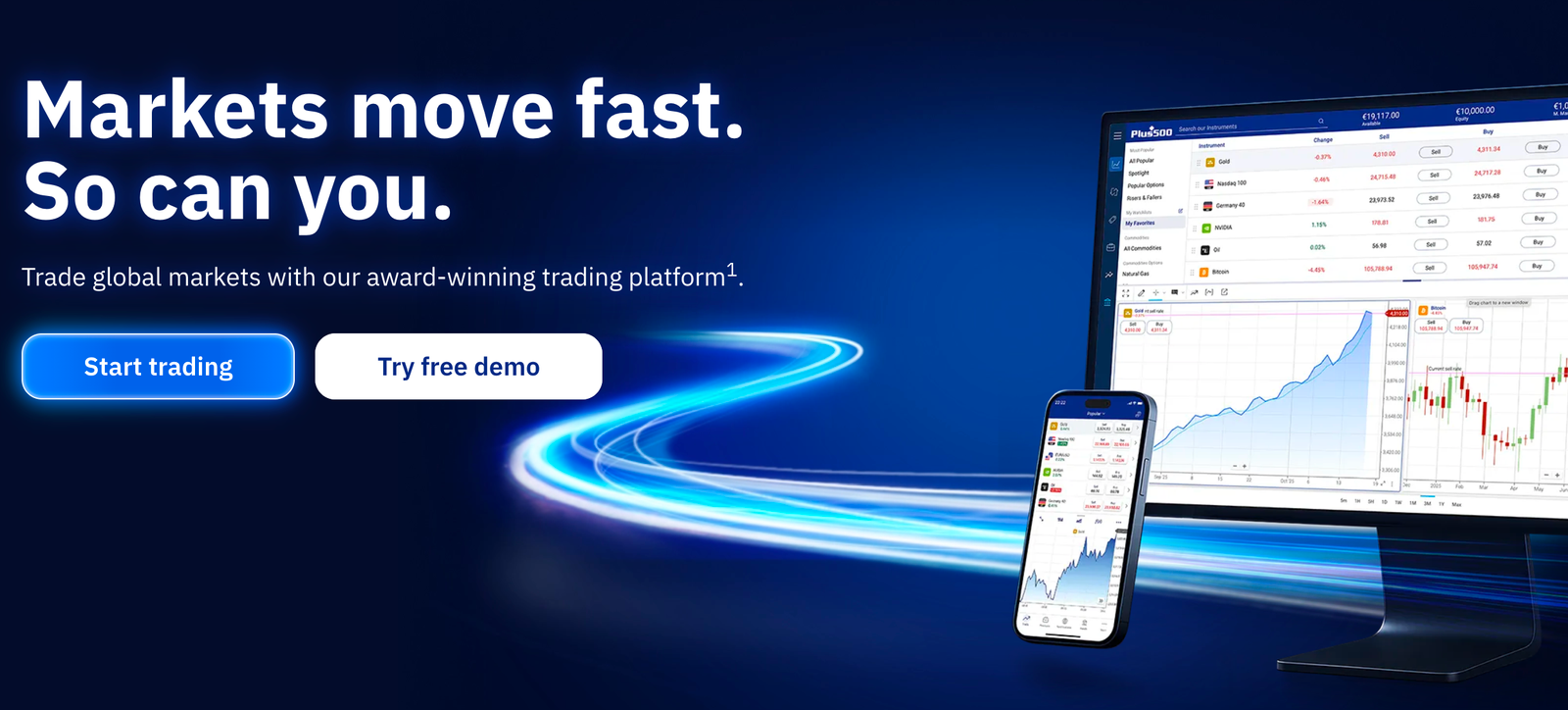
Everything happens on one dashboard — your instruments, charts, positions, and balance. It’s web-based, so you don’t need to download heavy software, and the mobile app is just as good (I actually use it more often).
I’ve tried other brokers since then (MetaTrader platforms, eToro, etc.), and honestly, Plus500 still wins on ease of use. There’s no clutter, no confusing order types, and you can open or close trades in seconds.
That said, if you’re a hardcore technical trader who loves customizing indicators, scripting bots, or doing deep chart analysis, Plus500 might feel too basic. The charting tools are fine for quick analysis — you’ve got moving averages, RSI, MACD, and trend lines — but you won’t get the kind of detail you’d see on TradingView or MT5.
For me, though, it hits the sweet spot: simple enough not to overwhelm you, but still gives enough data to make smart trades.
What You Can Trade: Pretty Much Everything You’d Want
Over the years, I’ve traded a bit of everything on Plus500 — forex pairs, commodities, indices, and even some cryptocurrencies (though I avoid those during crazy volatility).
The platform offers CFDs (Contracts for Difference), which means you’re not buying the asset itself — you’re just speculating on price movements. So you can go long or short, and trade both sides of the market.
Here’s roughly what’s available:
Forex: Major, minor, and exotic pairs (EUR/USD, GBP/JPY, USD/ZAR, etc.)
Commodities: Gold, silver, oil, natural gas
Indices: NASDAQ, S&P 500, FTSE 100, DAX, and more
Shares: Popular global stocks like Apple, Tesla, Amazon
ETFs: A decent selection, though not huge
Crypto CFDs: Bitcoin, Ethereum, and a few others
It’s not the most extensive catalog on earth, but for most retail traders, it’s more than enough.
Leverage and Margin: Powerful but Dangerous
One of the first things that caught my attention with Plus500 was leverage. Depending on where you live, you can get up to 1:30 for retail clients (and more for professionals).
It’s tempting — I mean, who doesn’t want to control a $3,000 position with just $100? But it’s a double-edged sword. I learned that lesson the hard way after blowing up my first real account in a week.
To Plus500’s credit, they make it pretty clear how margin and leverage work. The platform shows your required margin, available balance, and even sends a margin call alert if you’re close to liquidation.
They also offer negative balance protection, which basically means you can’t lose more money than what’s in your account. That’s a nice safety net — especially when the market goes nuts after some unexpected news.
Fees and Spreads: Transparent but Not the Cheapest
Let’s be real: no broker is perfect when it comes to fees.
Plus500’s spreads are competitive but not the lowest. For example, EUR/USD might have a 0.8–1.0 pip spread depending on market conditions. There are no commissions, which is great — everything’s built into the spread.
You’ll also encounter:
Overnight funding (swap fees) if you hold a position overnight
Currency conversion fees if your trades aren’t in your account’s base currency
Inactivity fee (about $10/month) after 3 months of no activity
That inactivity fee stung me once when I took a break from trading, but lesson learned — log in occasionally to avoid it.
The good news is, deposits and withdrawals are free, and in my experience, withdrawals have always been fast — usually hitting my bank within 2–3 business days.
Reliability and Performance
After four years, I can say Plus500 is stable. I’ve never had a system crash during high-volatility events (unlike some other brokers). The prices update in real-time, and the execution is quick.
Occasionally, I’ve seen small slippage during crazy events (like NFP or CPI announcements), but that’s normal for CFDs in general.
Also, I like how the platform automatically logs you out after inactivity — small touch, but good for security.
Security and Regulation: Feels Safe
This is one area where Plus500 earns major trust points. It’s a regulated broker, operating under several licenses (FCA, CySEC, ASIC, etc.). My account is under the CySEC entity, and they follow strict rules for client fund segregation and AML compliance.
Basically, your money is kept in separate bank accounts from the company’s funds. That’s a big deal for peace of mind.
They also use SSL encryption, two-step verification, and — again — negative balance protection. I’ve never had a single issue with security or fund handling.
Customer Support: Pretty Solid Overall
I’ve only needed to contact support a handful of times, but they’ve been decent. There’s no phone support, but they have live chat and email, and I usually got replies within an hour.
One time I messed up a withdrawal because I entered my old bank details — their support team fixed it within the same day.
They’re not overly chatty (don’t expect long explanations), but they get the job done.
The Mobile App: Surprisingly Good
Honestly, I trade more on my phone than on desktop. The Plus500 mobile app is clean, smooth, and just works.
You can:
Open and close trades quickly
Set price alerts and notifications
Access charts and indicators
Manage your funds and withdrawals
Push notifications are helpful too — you get alerts when prices hit your target or if a position is nearing a stop loss.
It’s one of the most user-friendly trading apps I’ve tried — perfect if you like to trade on the go or check your positions during lunch breaks.
Pros and Cons (After 4 Years)
Let’s break it down honestly.
✅ Pros
Super easy to use, even for beginners
Clean interface — no clutter, everything’s in one place
Reliable platform, rarely any downtime
Fast deposits/withdrawals, no hidden fees
Good selection of instruments across markets
Strong regulation and safety features
Negative balance protection
Solid mobile app
❌ Cons
Limited charting tools for advanced traders
No social trading or copy trading
Inactivity fee after 3 months
No direct phone support
CFD-only trading (you don’t actually own assets)
Leverage risk — easy to over-leverage if you’re not careful
Who I Think Plus500 Is Best For
If you’re a beginner or intermediate trader who wants a simple, safe, and easy-to-navigate trading platform — Plus500 is perfect.
It’s ideal for people who:
Want to trade casually without getting buried in technical tools
Value security and reliability
Prefer clear pricing and no commission surprises
But if you’re a hardcore chartist, algorithmic trader, or want community features like copy trading — you’ll probably find Plus500 too limited.
It’s not trying to be the Swiss Army knife of trading. It’s more like a clean, efficient tool for people who just want to trade CFDs and move on.
Final Verdict: Still My Go-To After 4 Years
I’ve opened accounts with other brokers since then — just to compare — but I keep coming back to Plus500. It’s simple, transparent, and works.
Sure, it doesn’t have all the bells and whistles, but for me, that’s kind of the point. I don’t want to spend hours customizing charts or coding bots. I want a stable, regulated broker where I can place trades confidently and withdraw profits easily.
So yeah, after four years, my overall impression is very positive.
Not perfect — but definitely one of the most beginner-friendly and trustworthy CFD platforms out there.
⭐ Final Rating: 4.3/5
✅ Best for: Simplicity, security, and everyday CFD trading
⚠️ Not ideal for: Advanced or automated traders