
Top 5 Best ETFs to Invest In: A UK Investor’s Perspective
Exchange-Traded Funds (ETFs) have become a core building block of successful investment portfolios across the UK. Their combination of low costs, broad diversification and ease of access makes them particularly attractive in an environment where long-term consistency matters more than short-term speculation. While thousands of ETFs are available to UK investors, a small number consistently stand out as portfolio foundations due to their scale, efficiency and strategic relevance.
This article outlines the top five best ETFs to invest in for UK investors, focusing on funds that provide durable exposure to global growth, income, diversification and resilience. These ETFs are not chosen for novelty or recent performance spikes, but for their long-term suitability within professional investment strategies.
1. Vanguard FTSE All-World UCITS ETF
Best for: Long-term global equity exposure
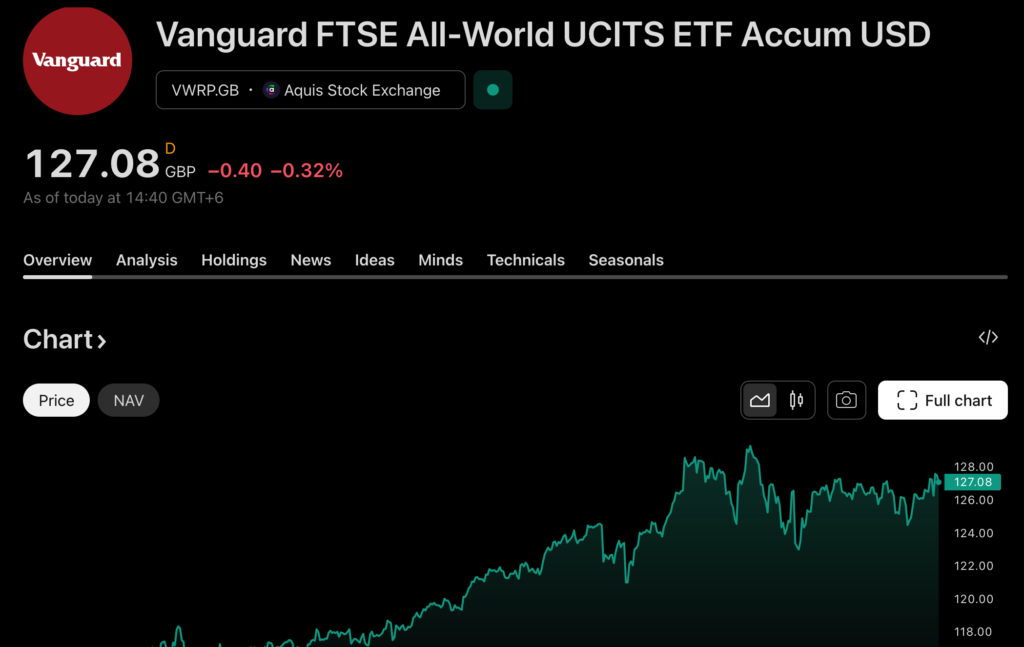
A global equity ETF is widely regarded as the most effective starting point for any portfolio, and the Vanguard FTSE All-World UCITS ETF remains one of the strongest options available to UK investors. It offers exposure to thousands of companies across developed and emerging markets in a single investment.
This ETF tracks global market capitalisation, meaning it naturally allocates more weight to larger economies such as the United States while still maintaining meaningful exposure to Europe, Asia and emerging markets. The result is a portfolio that reflects the global economy as it evolves.
Key advantages include:
Broad diversification across regions and sectors
Low ongoing costs relative to active global funds
Reduced reliance on individual countries or industries
Strong suitability for ISAs and SIPPs
For investors seeking simplicity, this ETF can function as a standalone equity solution or as the core of a more complex portfolio.
Vanguard FTSE All-World UCITS ETF – Pros and Cons
| ✅ Pros | ❌ Cons |
|---|---|
| ✅ Broad global diversification across developed and emerging markets | ❌ Exposure to emerging markets increases volatility |
| ✅ Thousands of companies included in a single ETF | ❌ Significant weighting toward US equities |
| ✅ Low ongoing charges suitable for long-term investing | ❌ Subject to currency fluctuations for UK investors |
| ✅ Strong core holding for ISAs and SIPPs | ❌ No opportunity for outperformance versus the market |
| ✅ Physically replicated for transparency | ❌ Limited flexibility for tactical or sector-based strategies |
| ✅ Available in both accumulating and distributing versions | ❌ Fully exposed to global equity market downturns |
2. iShares Core MSCI World UCITS ETF
Best for: Developed market stability and scale
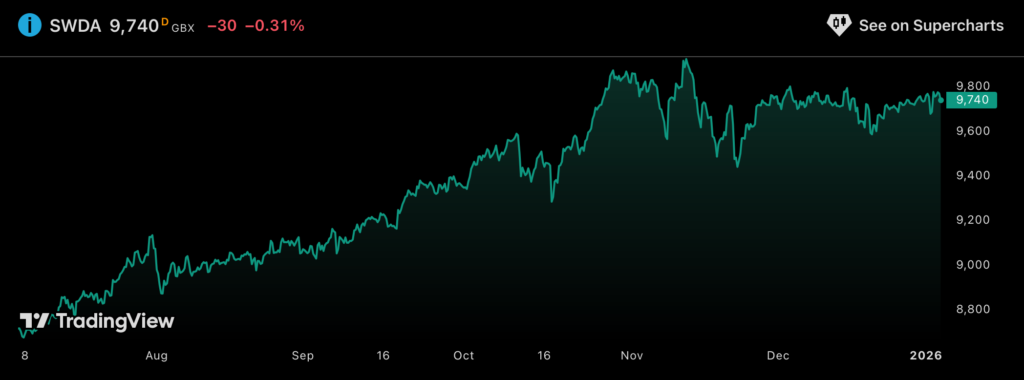
For investors who prefer to focus on developed economies, the iShares Core MSCI World UCITS ETF is a compelling alternative. It excludes emerging markets and concentrates on large and mid-cap companies in established economies such as the US, UK, Japan and Western Europe.
This ETF is particularly popular among professional investors due to its scale, liquidity and consistency. It provides exposure to global leaders across technology, healthcare, finance and consumer sectors.
Why it stands out:
Concentration in high-quality, established markets
Strong historical resilience during market downturns
Extremely competitive ongoing charges
Suitable as a core equity holding
This ETF works well for investors who want global exposure but prefer lower volatility and reduced geopolitical risk compared to emerging markets.
iShares Core MSCI World UCITS ETF – Pros and Cons
| ✅ Pros | ❌ Cons |
|---|---|
| ✅ Broad exposure to developed markets across North America, Europe, and Asia | ❌ Excludes emerging markets, limiting growth potential |
| ✅ Low-cost ETF with competitive ongoing charges | ❌ Heavy concentration in US equities |
| ✅ High liquidity and large assets under management | ❌ Market-matching returns only; no active outperformance |
| ✅ Physically replicated for transparency | ❌ Limited flexibility for sector-specific investment strategies |
| ✅ Suitable as a core holding in ISAs and SIPPs | ❌ Fully exposed to equity market downturns |
| ✅ Available in accumulating and distributing versions | ❌ Not tailored for investors seeking high dividend income |
3. Vanguard S&P 500 UCITS ETF
Best for: Exposure to US market leadership
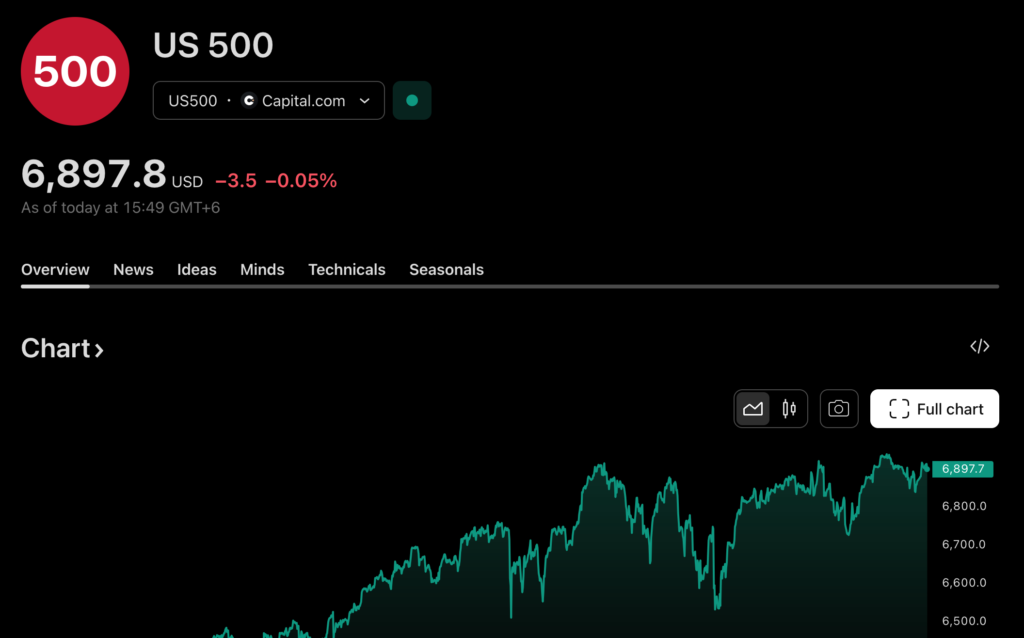
The United States continues to dominate global equity markets in terms of innovation, earnings growth and capitalisation. The Vanguard S&P 500 UCITS ETF provides targeted exposure to 500 of the largest publicly traded US companies, representing a broad cross-section of the American economy.
This ETF is widely used by UK investors either as a standalone growth holding or as an overweight allocation within a diversified portfolio.
Key reasons to consider it:
Exposure to world-leading companies and sectors
High transparency and liquidity
Strong long-term growth profile
Low cost and efficient structure
While it introduces concentration risk compared to global ETFs, the S&P 500 remains a powerful growth engine within long-term portfolios.
Vanguard S&P 500 UCITS ETF – Pros and Cons
| ✅ Pros | ❌ Cons |
|---|---|
| ✅ Provides exposure to 500 of the largest US companies | ❌ Concentrated in a single country, increasing geographic risk |
| ✅ Tracks world-leading sectors such as technology, healthcare, and finance | ❌ Market-matching returns only; cannot outperform the S&P 500 |
| ✅ Low ongoing charges, cost-efficient for long-term investing | ❌ US dollar-denominated, introducing currency risk for UK investors |
| ✅ Highly liquid and widely traded on the LSE | ❌ Limited diversification outside US equities |
| ✅ Physically replicated for transparency | ❌ Can be volatile during US equity market downturns |
| ✅ Available in accumulating and distributing versions | ❌ Not ideal for investors seeking broad global exposure |
4. iShares Core Global Aggregate Bond UCITS ETF
Best for: Portfolio balance and risk management
Equity growth is essential, but bonds remain critical for managing volatility and protecting capital. The iShares Core Global Aggregate Bond UCITS ETF provides diversified exposure to government and corporate bonds across multiple countries and currencies.
This ETF acts as a stabilising force within portfolios, particularly during periods of equity market stress. It is commonly used in balanced or conservative investment strategies and becomes increasingly relevant as investors approach retirement.
Primary benefits include:
Broad diversification across bond issuers
Reduced portfolio volatility
Income generation potential
Useful counterbalance to equity risk
For UK investors, bond ETFs are particularly effective within SIPPs and multi-asset portfolios where capital preservation matters.
iShares Core Global Aggregate Bond UCITS ETF – Pros and Cons
| ✅ Pros | ❌ Cons |
|---|---|
| ✅ Broad exposure to government and corporate bonds worldwide | ❌ Lower long-term growth compared to equities |
| ✅ Helps reduce portfolio volatility and smooth returns | ❌ Sensitive to interest rate changes |
| ✅ Diversification across multiple countries and currencies | ❌ Currency risk for UK investors if unhedged |
| ✅ Low-cost and efficient for long-term bond exposure | ❌ Returns may lag during strong equity bull markets |
| ✅ Suitable for ISAs, SIPPs, and multi-asset portfolios | ❌ Limited income compared to high-yield bonds |
| ✅ Provides balance and risk management within portfolios | ❌ Can lose value in rising interest rate environments |
5. iShares Physical Gold ETC
Best for: Inflation protection and diversification
Gold has long played a role as a defensive asset, and the iShares Physical Gold ETC provides a simple and efficient way for UK investors to gain exposure without the complexities of physical ownership.
Unlike equities or bonds, gold often behaves differently during periods of inflation, currency weakness or geopolitical uncertainty. As a result, it is commonly included as a small but strategic allocation within diversified portfolios.
Why gold earns a place in the top five:
Acts as a hedge against inflation and systemic risk
Low correlation with equities over the long term
Enhances portfolio diversification
Simple, transparent structure
Gold ETFs are typically held as a supporting asset rather than a growth driver, but their stabilising effect can be valuable during turbulent markets.
iShares Physical Gold ETC – Pros and Cons
| ✅ Pros | ❌ Cons |
|---|---|
| ✅ Provides direct exposure to the price of gold | ❌ Does not generate income or dividends |
| ✅ Acts as a hedge against inflation and currency risk | ❌ Can be volatile during periods of low market stress |
| ✅ Low correlation with equities and bonds | ❌ Prices can fluctuate based on global sentiment rather than fundamentals |
| ✅ Simple and transparent structure | ❌ Limited growth potential compared to equities |
| ✅ Useful diversification tool in multi-asset portfolios | ❌ May underperform during strong equity bull markets |
| ✅ Can be held in ISAs and SIPPs | ❌ No capital appreciation from reinvested income |
How to Use These ETFs Together
Building a Strong Core Allocation
The foundation of an effective ETF portfolio is a strong core allocation. Global and developed market equity ETFs should typically form the largest portion of the portfolio, as they provide broad exposure to worldwide economic growth. By investing across multiple regions and sectors, these ETFs reduce concentration risk and limit dependence on the performance of any single market. For UK investors, this approach supports long-term capital growth while maintaining diversification at scale.
Enhancing Growth with US Equity Exposure
A dedicated US equity ETF can be added as a satellite holding to enhance growth potential. The US market continues to dominate global equity returns through innovation, earnings strength and market leadership. While this increases exposure to a single country, it can be appropriate for investors with higher risk tolerance and longer investment horizons when balanced against global holdings.
Managing Risk with Bond ETFs
Bond ETFs play a crucial role in managing portfolio volatility. They provide stability during equity market downturns and help smooth returns over time. As investors move closer to retirement or prioritise capital preservation, bond allocations typically increase. Bond ETFs are particularly effective within SIPPs, where income and risk control are key considerations.
Strengthening Diversification with Gold
A modest allocation to gold acts as a portfolio diversifier and defensive hedge. Gold can help protect against inflation, currency weakness and periods of market stress. While it does not generate income, its low correlation with equities can improve overall portfolio resilience.
Maintaining Balance Through Rebalancing
Regular rebalancing ensures the portfolio remains aligned with long-term objectives. By adjusting allocations periodically, investors maintain discipline, manage risk and avoid emotional decision-making during volatile market conditions.
Final Thoughts
For most UK investors, the most effective ETF strategy is not about complexity, market timing or chasing short-term trends. Instead, it is about building a well-structured portfolio using high-quality ETFs that provide broad exposure, low costs and long-term consistency.
We recommend starting with a global equity ETF as the core holding, as this offers instant diversification across countries, sectors and currencies. For investors seeking higher growth potential, adding a US equity ETF can enhance returns, provided it is balanced against global exposure. To manage risk and reduce volatility, a global bond ETF should be incorporated, particularly for those with shorter time horizons or lower risk tolerance. Finally, a modest allocation to gold can strengthen diversification and provide protection during periods of inflation or market stress.
These ETFs are best used together within a disciplined, long-term framework, ideally held inside tax-efficient wrappers such as ISAs or SIPPs. Regular rebalancing and a clear investment objective are essential to maintaining portfolio alignment over time.
Overall, this approach prioritises diversification, cost efficiency and resilience — key factors that underpin sustainable investment outcomes for UK investors.
Frequently Asked Questions (FAQ)
What are the best ETFs to invest in for UK investors?
The best ETFs for UK investors are typically low-cost, UCITS-compliant funds that offer broad diversification. Global equity ETFs, developed market ETFs, US equity ETFs, bond ETFs and gold ETFs are commonly used together to create balanced, long-term portfolios.
Are ETFs safe to invest in?
ETFs are generally considered safe investment vehicles in terms of structure and regulation, particularly UCITS ETFs available in the UK. However, they are still subject to market risk, meaning their value can rise and fall depending on underlying asset performance.
Can ETFs be held in an ISA or SIPP?
Yes. Most ETFs available to UK investors can be held within Stocks & Shares ISAs and SIPPs. This allows investments to grow tax-efficiently, making ETFs especially attractive for long-term wealth building and retirement planning.
Are accumulating or distributing ETFs better?
Accumulating ETFs are typically better for long-term investors because dividends are automatically reinvested, enhancing compound growth. Distributing ETFs may be more suitable for investors seeking regular income, such as retirees.
How many ETFs should I own?
Many UK investors successfully build portfolios using between three and six ETFs. A small number of high-quality ETFs often provides sufficient diversification without unnecessary complexity.
Do ETFs require active management?
ETFs themselves are passive investments, but portfolios still require oversight. Periodic rebalancing helps maintain target allocations and manage risk as markets change.
Is now a good time to invest in ETFs?
ETFs are most effective when used as long-term investments. Rather than trying to time the market, investors typically benefit from regular contributions and maintaining exposure through market cycles.