
Choosing between OKX and Plus500 depends heavily on what type of assets you trade and how experienced you are with financial markets. I have used both platforms extensively over the past several years, but for entirely different purposes. OKX has always been my choice for cryptocurrency trading, particularly during high-volatility market cycles where liquidity and order execution matter most. I used it primarily for spot trading, futures, and staking products. In contrast, Plus500 became my default platform for CFD trading, especially when dealing with indices, commodities, and forex due to its simplicity, reliability, and regulated environment.
This comparison is based on actual, long-term experience rather than superficial opinions. I will explain how both platforms behave under real trading conditions, how fast they execute orders, what the fees look like in practice (not only as advertised), and how easy or difficult they are to use on a daily basis. Instead of simply repeating marketing claims, I focus on what truly matters: platform reliability, trading performance, security, withdrawals, and customer support.
Both platforms are legitimate and widely used, but their differences are significant. OKX is a feature-rich environment suitable for active traders who want access to advanced tools. Plus500 is the opposite: clean, straightforward, and built for traders who value clarity and ease of use. By the end of this comparison, you will have a clear understanding of which platform aligns better with your goals, whether you are a crypto trader, a CFD trader, or someone searching for the simplest trading experience possible.
Regulation, Security, and Trust
Based on my experience, one of the biggest differences between OKX and Plus500 is how they are regulated and how safe they feel for storing funds. Plus500 is a fully regulated CFD broker operating under strict financial rules. It is authorised by the FCA in the UK, CySEC in the EU, ASIC in Australia, MAS in Singapore, and other regulators globally. This multi-layer regulatory framework gives Plus500 a high level of credibility. It operates transparently, is publicly listed on the London Stock Exchange, and must follow strict capital, reporting, and customer protection requirements. In practice, this gives traders a sense of security, especially beginners who are concerned about fraud, data misuse, or insolvency.
OKX operates in a different environment. Like all major cryptocurrency exchanges, it is not FCA-regulated and operates mainly under offshore regulatory frameworks. Despite this, OKX has earned trust within the crypto community due to its strong security track record. It offers proof-of-reserves audits, cold-storage solutions, multi-layer security protocols, and a long operational history without major scandals. During my usage, I never experienced a single security breach, loss of funds, or suspicious account behaviour. Withdrawals have always been processed reliably, typically within minutes.
However, crypto exchanges inherently involve more risk than regulated CFD brokers. They hold customer assets directly, and the crypto market itself is more volatile and less regulated. Traders must take personal security seriously, including using 2FA and avoiding leaving large sums on the platform.
In summary, Plus500 wins in terms of formal regulation and traditional financial security, while OKX provides strong crypto-native security but carries the higher risk associated with digital asset markets.
Trading Experience
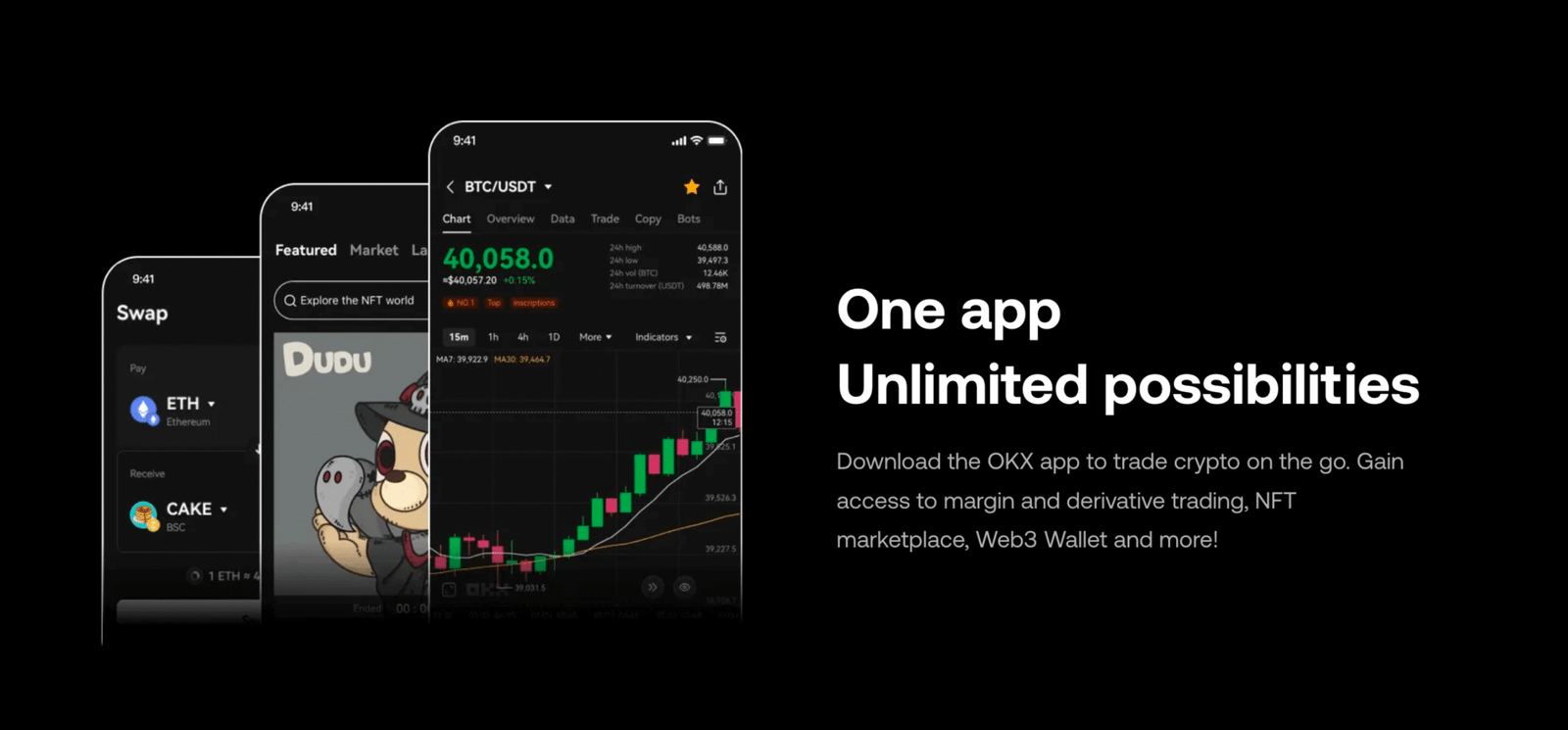
My trading experience with OKX and Plus500 has been very different because each platform is designed for different types of trading. OKX offers a professional crypto trading environment with deep liquidity, fast order execution, and a wide range of advanced order types. When trading on OKX, I felt like I had the same tools available that large institutional or high-frequency traders use. The charts integrate smoothly with TradingView, which makes technical analysis very efficient. Futures trading on OKX is particularly strong, with tight spreads and high liquidity on major pairs such as BTC and ETH.
By comparison, Plus500 provides a simplified trading interface focused on CFDs. It is ideal for traders who want to open and close positions quickly without navigating complicated charts or tools. The trading window is clean and minimalistic, and the platform is extremely easy to understand. Opening and closing positions is straightforward, and risk management tools such as guaranteed stop loss provide additional protection that crypto exchanges do not offer.
However, Plus500’s simplicity comes at the cost of advanced tools. Its charting system is basic compared to OKX, and spreads can widen significantly during volatile periods. Still, for trading indices, forex pairs, or commodities, Plus500 excels because of its convenience and regulatory protection.
From my experience, OKX is best for traders who need advanced functionality and want to take advantage of crypto volatility. Plus500 is best for beginners or those who prefer a straightforward CFD trading environment with fewer complications.
Fees and Costs
Fee structures vary significantly between OKX and Plus500 because crypto exchanges and CFD brokers work differently. OKX applies a standard maker-taker fee model, with some of the lowest trading fees in the crypto industry. Spot trading fees are extremely competitive and can drop even further if you hold OKB tokens or trade high volumes. Futures fees are among the lowest I have encountered, making OKX one of the best platforms for derivatives trading. There are no hidden charges, and deposits are often free depending on the method.
Plus500 fees operate through spreads rather than direct commissions. This means the cost is built into the difference between the buy and sell price. While spreads are reasonable during normal market hours, they can widen during news events or sudden volatility. Plus500 also charges overnight financing fees for leveraged positions held open past market close. In my experience, this is where costs can add up if you are not aware of them. For short-term trades, spreads are predictable, but for long-term CFD positions, overnight fees make them expensive.
Withdrawal fees differ as well. OKX typically charges blockchain network fees, which vary depending on the asset. Plus500 withdrawals are generally free, but they may include inactivity fees if you stop trading for several months.
Overall, OKX is more cost-effective for active traders, especially if you frequently enter and exit trades. Plus500 is cost-efficient for short-term CFD trades but becomes expensive for long-term positions due to overnight financing.
Platform Tools and Features
OKX is feature-rich, offering a full suite of trading tools designed for advanced users. Its spot and futures markets come with detailed order book data, multiple order types, risk management tools, algorithmic trading options, and integrated TradingView charting. OKX also offers staking, cryptocurrency earning programs, a launchpad for new tokens, and a strong ecosystem for DeFi-related products. During my usage, I found the platform highly flexible. Whether I needed advanced indicators for scalp trading or long-term staking options, OKX always provided more depth than typical trading platforms.
Plus500 takes a different approach. It focuses on clarity and simplicity rather than advanced features. Its strongest feature is ease of use. The layout is intuitive, charts are clean, and placing a trade takes only a few seconds. There are built-in risk tools such as guaranteed stops, which are incredibly useful for new traders who want strict protection from volatility. However, Plus500 lacks the depth of technical indicators, advanced order types, and third-party integrations that OKX offers. It is designed for efficient CFD execution rather than sophisticated analysis.
In practice, I use OKX when I plan to apply detailed technical analysis, automate trades, or use leverage on crypto futures. I use Plus500 for quick CFD trades where simplicity matters more than charting depth. Therefore, OKX wins for technical sophistication, while Plus500 wins for simplicity and ease of execution.
Deposit, Withdrawal, and Customer Support
In terms of deposits and withdrawals, both OKX and Plus500 performed reliably for me, but the methods differ. OKX provides crypto deposits, crypto withdrawals, and various fiat channels depending on region. Crypto deposits are fast, usually appearing in minutes. Withdrawals are also quick, though network conditions can affect timing. The platform always required two-factor authentication and withdrawal confirmation, which is reassuring. Customer support is handled through live chat and ticket systems. Response times varied, but generally I received answers within a few hours.
Plus500 supports bank transfer, debit/credit cards, and PayPal deposits. Withdrawals to bank accounts have consistently taken between one and three business days in my experience. The process is smooth and predictable, and having FCA oversight adds reassurance. Customer support is efficient, and although it lacks live telephone support, the chat and email support have always responded within a reasonable timeframe. Plus500’s knowledge base is also comprehensive and helpful for beginners.
One difference is compliance checks. Due to regulation, Plus500 performs strict KYC and verification steps which occasionally slow onboarding. OKX also requires identity verification but is more flexible depending on the functionality you want access to.
Overall, both platforms handle deposits and withdrawals efficiently. OKX is faster for crypto transactions, while Plus500 is more traditional and stable for bank-related transfers. Customer support quality is solid on both, though Plus500’s regulatory structure provides an extra layer of confidence.
OKX vs Plus500 – Comparison Table
| Category | OKX | Plus500 |
|---|---|---|
| Type of Platform | Cryptocurrency exchange | CFD & online trading broker |
| Assets Offered | Cryptos (spot, futures, options), staking, Web3 wallet, DeFi tools | CFDs on stocks, indices, forex, commodities, crypto-CFDs |
| Regulatory Status | Operates globally; regulation varies by region | Fully regulated broker; publicly listed company |
| Tradable Instruments | 300+ cryptocurrencies depending on region | 2,000+ CFD instruments (varies by jurisdiction) |
| Fees | Maker/taker model, typically low trading fees; network fees for withdrawals | Spreads are the main cost; no traditional commissions |
| Leverage | Leverage available on crypto derivatives | Leverage available on many CFD asset classes |
| User Interface | Advanced tools, charts, bots, Web3 integration | Very beginner-friendly interface |
| Deposit Methods | Crypto deposits, bank transfers, card purchases (varies by region) | Bank transfer, credit/debit card, e-wallets (region-dependent) |
| Withdrawals | Crypto withdrawals, some fiat depending on region | Standard broker withdrawals (bank, card, e-wallet) |
| Security | Cold storage, multi-layer security; some historical regulatory actions | Strong compliance and regulatory oversight |
| Best For | Crypto-focused users, active traders, Web3 users | Newer traders, multi-asset CFD traders, regulated environment seekers |
| Main Risks | Crypto volatility, regional regulatory uncertainty | CFD leverage risk, no ownership of underlying assets |
Final Verdict
After using both platforms extensively, I can confidently say they are both excellent, but for very different purposes. OKX is the superior choice for traders who want full control, advanced tools, professional charting, low fees, and access to crypto markets. It is ideal for experienced users or traders who enjoy analysing markets in detail and making use of futures, margin trading, and automated strategies. If you are a crypto-focused trader, OKX offers more value than Plus500 in nearly every category.
Plus500, on the other hand, shines for its simplicity and regulation. It is a trustworthy platform for CFD trading on indices, commodities, forex, and stocks. For new traders or those who want a clean, easy-to-understand interface, Plus500 is the better choice. The absence of complex features makes it accessible and less overwhelming for beginners. It is also well suited for traders who prefer working within a regulated environment and do not want to deal with the additional risks associated with unregulated crypto markets.
Ultimately, your choice depends on what you want to trade. If your focus is crypto, OKX is the clear winner. If you prefer traditional CFD trading with a simple interface and strong regulatory protection, Plus500 is a better fit. In many cases, experienced traders may find value in using both platforms for different strategies. Based on my usage, each has strengths that complement the other.